• Skip to primary navigation
  • Skip to main content
  • Skip to primary sidebar
The Outdoor Bilingual Learner

The Outdoor Bilingual Learner

Learning Languages Through Nature

  • Blog
    • Language Learning
    • Language Learning Notebooks
    • Outdoor Learning
    • Pony Adventures
  • English Activity Vault
  • Book
  • About Rachel

Exploring Nature’s Vocabulary: A Walk in the Forest

Rachel Lechner

Introduction

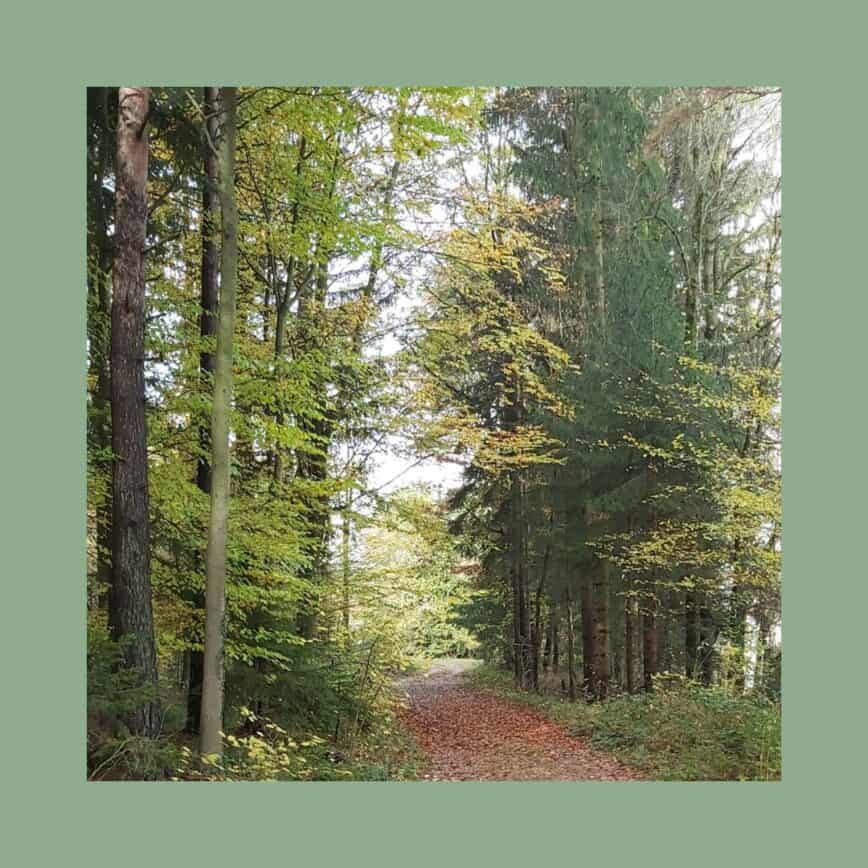
Welcome, nature-loving families! Today, we are going on a delightful journey through the forest , not just to revel in the beauty of nature but to unlock the wonders of language learning.

What is our focus? Enriching your children’s vocabulary in either English or German (or any other language that you may be focussing on). So, lace up those hiking boots and let’s dive into the magic of language amidst the trees.


Setting the Scene

As you enter the woods, engage your children’s senses. Encourage them to describe what they see, hear, and feel. “Look at the tall trees! How would you say ‘tree’ in English or German?” (Tree – der Baum) This interactive start sets the stage for a bilingual adventure.


Path Treasures

Pause along the path to discover treasures – leaves, rocks, or even a pinecone. Teach the corresponding words in both languages. “This leaf is ‘Blatt’ in German and ‘leaf’ in English. Can you find more?” Encouraging repetition for reinforcement at all times.


Nature’s Music

Listen to the rustle of leaves, chirping birds, and babbling brooks. Introduce nature-related words like ‘bird’ and ‘stream’ in both languages. Create a game by mimicking bird calls or identifying different sounds.

Bird – der Vogel

Stream – der Bach

stones – die Steine

Here is a link to my Instagram page which shows various reels with relevant naure vocabulary.

Story Stones

Bring along story stones with images of animals, plants, or weather. Each stone becomes a language prompt. “Oh, a sun on the stone! In German, we say ‘die Sonne,’ and in English, it’s ‘sun.’ Can you find another stone?”


Picnic with a Twist

During the  picnic, make it a language feast. Label snacks in both languages. “This apple is  ‘die Äpfel’ in German and an ‘apple’ in English.” Turn every bite into a chance for language exploration. you can also do some eating games. Take two bites of your apple, take two blueberries out of the box, endless language learning fun.


Leafy Art
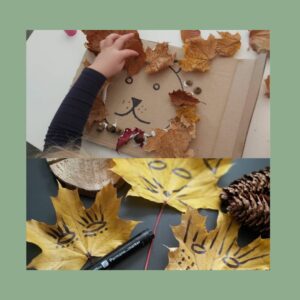
Collect fallen leaves and create art. Ask questions like, “How would you describe this leaf in English or German?” Encourage creativity and expression, turning the forest into a canvas for language learning.

crunchy – Knusperig

rustling – Rascheln

green  – grün,  red – rot, brown – braun, yellow – gelb

thorney – dornig


Closing Thoughts

As your forest language learning adventure session comes to an end, take a moment to reflect. Share your favorite discoveries and new words learned. This journey goes beyond the forest paths—it’s a gateway to a bilingual world filled with the richness of nature and language.

If you are looking for other ways of how to introduce language learning using nature and the great outdoors, check out my blog category Outdoor Learning for more inspirational ideas.

Happy language learning forest adventurers!

← Previous Post
How to Create a Fun Children’s Language Learning Notebook
Next Post →
Unveiling Our Pack Pony Training – The Basics

Categories: Language Learning + Outdoor Learning Tags: Charlotte mason Inspired + LANGAUGES + nature + outdoor learning

Primary Sidebar

Hi I’m Rachel

Your go-to Bilingual Mom for language learning and raising a bilingual child using nature and the great outdoors.

Follow me

  • Instagram
  • Pinterest

Newsletter

outdoor_bilingual_learner

🇬🇧 Ab 2026 KOSTENLOSE Englischunterricht auf Facebook/Youtube 7-12 Jahre
🌳 Englisch lernen mit + in der Natur
📗 Printables
@reitstallroemerhuette

This quote is taken from TOWARDS A PHILOSOPHY OF E This quote is taken from TOWARDS A PHILOSOPHY OF EDUCATION, Vol. 6 of the Homeschooling Series.

Charlotte Mason reminds us:
Children learn languages naturally — through hearing, imitating, and being immersed in real, meaningful experiences. Just think about how you and your child learnt your mother tongue!
This is exactly why outdoor learning, stories, crafts and gentle exposure work so brilliantly . 🌿

🇩🇪 Charlotte Mason erinnert uns daran:
Kinder lernen Sprachen ganz natürlich – durch Hören, Nachahmen und durch echte Erlebnisse.
Darum funktionieren Lernen in der Natur, Geschichten, Basteln und sanfte Sprachimpulse so wunderbar. 🌿

If you love Charlotte Mason–inspired English learning for kids, look out for my free weekly English lessons starting in January.

#CharlotteMason #OutdoorLearning #EnglishfürKinder #BilingualKids #HomeschoolingDE #VolkschuleEnglish #OutdoorBilingualLearner
Never too old!!! Emily asked me yesterday why we Never too old!!!

Emily asked me yesterday why we and other children her age no longer make lanterns for Saint Martin. And I had no answer, so here we are this afternoon and evening making and going walking with our lanterns.

#sanktmartin #laternen #laternenbasteln #motherdaughtertime #learninglanguages #rythmus
Do you use a language learning notebook with your Do you use a language learning notebook with your children? 

Take a look at just some of the ideas that are listed in the new blog post!
Autumn Language Learning Notebook📗 As the leaves Autumn Language Learning Notebook📗

As the leaves are now golden and the days are shorter, autumn gives us a wonderful opportunity to slow down and reflect. 
For us it’s a season of observation — and that makes it the perfect time to begin (or re-start) your Language Learning Notebook.

For children learning English as a foreign language, a notebook isn’t just a workbook, it’s a space for creativity, discovery, and connection with language. And you know I love the Inspiration from outdoors.

My Autumn Word Tree 🌳 is a fabulous way to focus on Vocabulary and Spelling.

Draw a big tree and write new English words on each branch or leaf. Add small pictures or nature stickers to make it more decorative.

The new blog is coming and there will be several Notebook pages for you to either print or design yourself.
Autumn activities for language learning is now up Autumn activities for language learning is now up on the blog. 

Whether your child is learning english as a foreign language or you just want some fun outdoor activites to do outside in autumn then have a read.
Do you go foraging in the forest for mushrooms? Do you go foraging in the forest for mushrooms?
Follow on Instagram

Copyright © 2025 · The Outdoor Bilingual Learner Reitstall Römerhütte KG Riegl 11a 8242 Sankt Lorenzen am Wechsel Privacy Statement Impression

Juniper Theme by Code + Coconut