Short Lessons and Big Adventures in Winter ❄️
How can outdoor language learning keep children motivated during the winter months?
Winter is often seen as a quiet season for learning, and it some scenarios I can completely agree with that, but when it comes to language learning it can be one of the most powerful times of the year. Short lessons combined with outdoor experiences can help children stay motivated, curious, and confident — even in cold weather. At Outdoor Bilingual Learner, we believe language learning should be lived, not scheduled.
Winter offers countless real-life opportunities to hear, use, and remember language naturally.
Winter Is Not a Break From Language Learning
Many families assume that language learning should pause during winter. In reality, children learn best when language is part of everyday life, not limited to books or screens. And I know I write and say this over and over again but language should really be aquired through speaking and listening and not through reading and writing (think again about how you learned your native language) A winter walk, a moment of observation, or a shared experience outdoors can provide more meaningful language exposure than a long indoor lesson.
Outdoor learning keeps language relevant and real. Related reading: https://outdoorbilinguallearner.com/tag/outdoor-learning/
Why Short Lessons Work Best in Winter (or actually at any time!)
Short lessons are a core principle of Charlotte Mason–inspired education. Especially in winter, children benefit from brief, focused learning moments. Five to fifteen minutes outdoors is often enough to introduce new vocabulary, practise speaking, or listen to a short story.
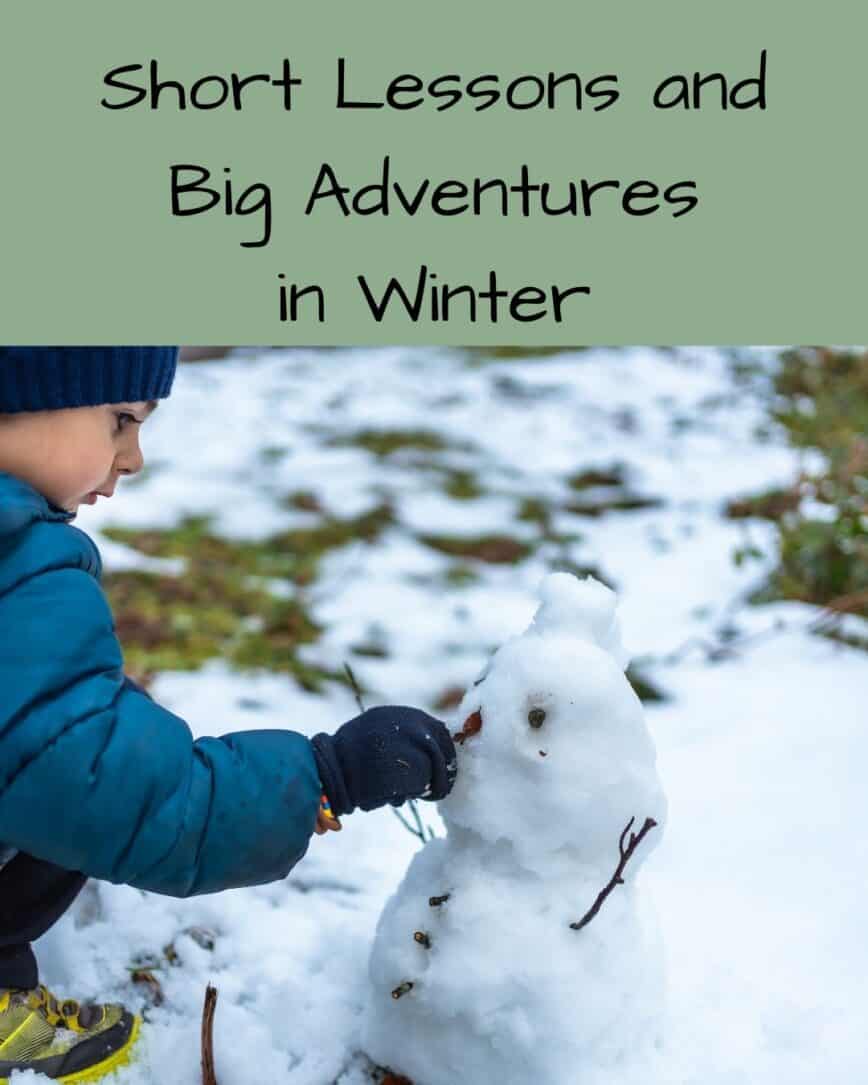
Let’s take for example the January Language Bucket List. How quickly can I go outside on a short walk and learn the words snow, cold, wind, ice? Then introduce short sentences. The snow is cold. It is very Icey. The snow is white. The wind is cold on my face. Boom, you have just learnt 4 new words and also spoke some simple sentences, and how long did it take?
Get into a snowball fight, “Ahh the snow is cold!” and other simple sentence and more words.
Short lessons prevent overwhelm and you are also making it fun and interactive so words stick and it is not boring.
You could then bring it indoors with a mug of hot chocolate and make an entry into your language learning notebook. Getting your child to draw a picture and maybe labeling things that they can remember.
Learn more: https://outdoorbilinguallearner.com/2024/05/13/childrens-language-learning-notebook-10-creative-ideas/
Let Nature Guide the Language
Winter provides rich sensory experiences that naturally invite language. Above we spoke about nature walks and snowball fights. these all create opportunities for meaningful vocabulary. When children experience language through their senses, words become easier to remember and use. Charlotte Mason principle reference: https://charlottemasoninstitute.org
Movement Supports Language Learning
Movement plays a crucial role in learning. Walking, exploring, climbing, and balancing help children process language naturally. Many children speak more freely when they move side by side with an adult, rather than sitting face-to-face. Movement reduces pressure and increases confidence. Just remember sitting at your desk and having to learn vocabulary. I know I found it tedious and extremely boring with no interactions.
Also if things get too cold outside or your child is feeling a little under the weather how about turning the language lesson into a crafts session. Busy hands, getting creative and also learning languages.
Create Simple Winter Language Rituals
Consistency matters more than length. Simple winter rituals help children feel secure and motivated. Building habits or even building a weekly rhythm can also help. Have a look at this Instagram post from a few years ago where I talked about rhythm and routines
Explore rhythms and routines: https://www.instagram.com/p/CU41IVgM5du/?igsh=ajEwbnV4NWZnOTNx
Use Real-Life Language Every Day
Children learn languages best when words are connected to real experiences. Talk about what you see, hear, and feel. Describe the cold air, crunchy snow, or warm hands inside gloves. This type of language learning builds confidence and long-term retention.
Example post: https://outdoorbilinguallearner.com/2024/06/17/learning-languages-through-nature-the-snails/
Big Adventures Don’t Need Long Lessons
Winter language learning does not need to be perfect. Short lessons combined with outdoor adventures are enough to build strong language foundations. Children learn best when learning feels meaningful, relaxed, and connected to life. Short lessons. Fresh air. Real language. I know I keep repeating myself but……..
Further Reading on Outdoor Bilingual Learner
https://outdoorbilinguallearner.com/2024/12/28/language-learning-journey-in-2025/ https://outdoorbilinguallearner.com/2025/10/19/learning-english-outdoors-autumn/
I you want more inspiration for learning languages through nature and the great outdoors get a hold of my book, which has various chapters such as Trees, Weather, Woodland animals and much more with either a recipe or craft idea plus simple sentences and flashcards to cut out and use.
Take a look here; https://outdoorbilinguallearner.com/book/
Happy Learning
Rachel