
Rachel here! If you’ve ever stood at the yard wondering whether you’re “allowed” to use essential oils for horses at all, you’re in good company. Most of the horse owners I meet aren’t looking for miracles. They just want a gentle, natural way to support their horse – and they want to know they’re doing it safely.
So let’s keep this simple. This is the calm, no-stress way to offer your very first oil, one step at a time. No pressure, no big claims. Just support.
Start With a Settled Horse (and a Settled You)
Before you open a single bottle, take a breath. Horses read us far more than we give them credit for, so if you’re nervous or in a rush, your horse will feel it.
Pick a moment when your horse is relaxed – after grooming, in a quiet corner of the yard, with no feed bucket or busy traffic nearby. Keep the halter on if that helps you both stay safe, but keep it loose. This isn’t about control. It’s about a conversation.
Offer, Don’t Apply
Here’s the heart of it: with essential oils, the horse gets to choose. Your job is simply to make the offer easy and safe.
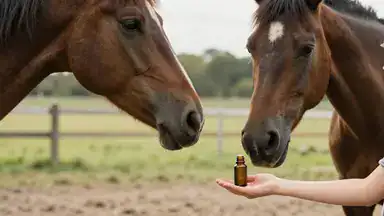
- Put a single drop on the palm of your hand, or on a clean cotton pad or just open the specific oil bottle.
- Hold it a comfortable distance from your horse’s nose – not pushing it into their face.
- Let them stretch forward to investigate if they want to. They can always turn away.
That turning away is important! A horse that lowers its head, softens its eye and lingers is curious. A horse that pulls back, snorts, or turns its whole body away is telling you “not today.” Both answers are okay. Listening is the whole skill.
One Oil at a Time
When you’re starting out, please resist the urge to try everything at once. Introduce a single oil, on a single day, and let your horse have a proper response to it. I started with an oil that I liked myself (Lavender).
This is how you actually learn what works. If you layer three oils in one session and your horse reacts, you won’t know which one helped – or which one was simply too much. Slow is not slow here. Slow is how you build trust.
Read Your Horse’s Answer
Once you’ve made the offer, give your horse the space to answer. You don’t need to interpret anything dramatic – just watch the everyday signs:
- Nostrils flaring gently and lip-smacking can mean curiosity.
- Lowering the head and softening the jaw usually says “I’m comfortable.”
- A tight mouth, a swishing tail, or stepping away says “too much, too close.”
If you get a “no,” don’t take it personally and don’t push. Close the bottle, step back, and try a different day. That respect is exactly what builds a horse that trusts you with the next offer.
Keep the Amount Tiny
When it comes to essential oils for horses, less truly is more. One drop goes a long way. You are never aiming to “cover” your horse in oil or to make a big, overwhelming scent cloud.
Never put essential oils where your horse can’t turn away from them – and never force a horse to inhale something. Think of it like offering a treat: they choose to take it, and they choose when to stop.
Make a Simple Note
This is the step most people skip, and it’s the one that pays off. After each session, jot down three quick things:
- The date and the oil you offered.
- How your horse responded in that moment.
- Anything you noticed later – calm, settled, more relaxed.
Over a few weeks, your notes become a personal guide. You’ll start to see which oils your horse leans into and which ones you can leave on the shelf. No guesswork, no copying what worked for someone else’s horse. Your horse, your notes.
Build a Gentle Routine
You don’t need a long routine. In fact, a short one done steadily beats a big dramatic one done once. Try this:
- Pick one calm moment at the yard.
- Offer one oil, the same way each time.
- Note the response.
- Stop while it’s still relaxed.
That’s it. Repeat it over a week, and you’ll notice something quietly wonderful: your horse starts to expect the moment, and the yard becomes a calmer place for both of you.
Remember, we are just talking about asking your horse to accept an oil, we are not yet talking about specific oils for specific needs.
A Few Safety Basics
A calm approach still needs a steady hand on the practical side:
- Use genuinely good-quality, properly diluted-for-horse-use oils, and keep the bottle closed and out of reach when you’re done.
- Keep oils away from eyes, open wounds, and the muzzle’s delicate membranes.
- Never leave a horse unattended with a bottle or a used cloth.
- If your horse is in foal, unwell, on medication, or you’re simply unsure, check with your vet first.
- Support is not a substitute for veterinary care. If something is wrong, call your vet.
No miracles. Just support – offered with patience and respect.
Your Next Step
If you’d like to walk through this properly, hand in hand, I’ve put together something to help: the Horse Oil Compass, a free 7-day WhatsApp course. Each day shows you which oils to use, exactly how to safely offer an oil to your horse, and how to weave essential oils into everyday life at the yard. Gentle, practical and at your own pace.
Horse Oil Compass English Version
Pferdeöl Kompass Deutsche Version
You don’t need to be an expert to start. You just need to slow down, offer, and listen. Your horse will tell you the rest.